Do you know that fathers play an important role in the success and sustainability of breastfeeding?
In fact, according to various research, when fathers are well-informed and supportive about breastfeeding, mothers are more likely to initiate and continue breastfeeding for a long.
Therefore, the presence of an engaged partner can make a significant difference for both the mother and baby’s health and well-being.
Fathers can play an important role in helping their partners through this beautiful parenting stage by providing emotional support, assisting with breastfeeding techniques, and advocating for the mother’s needs.
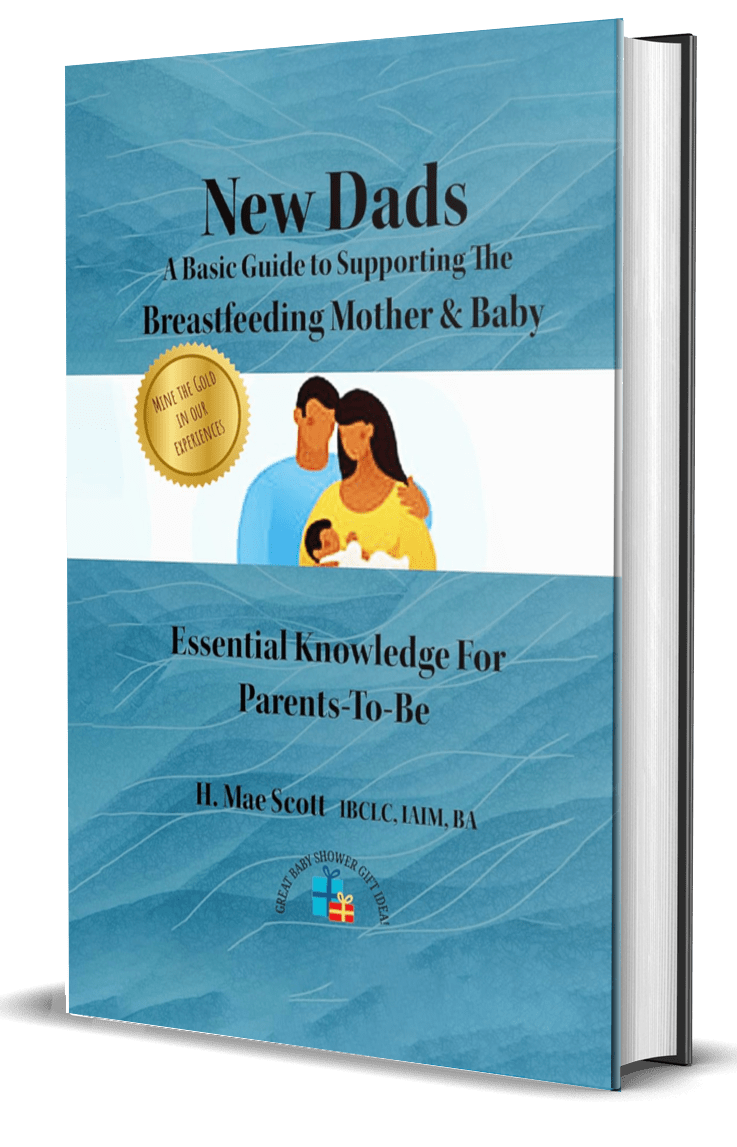
H. Mae Scott emphasizes that in “New Dads: A Basic Guide to Supporting the Breastfeeding Mother and Baby.”
Honestly, a father’s awareness plays a critical role in promoting a positive breastfeeding relationship. According to “New Dads: A Basic Guide to Supporting the Breastfeeding Mother and Baby,” dads who are familiar with the ins and outs of breastfeeding and nursing can provide helpful guidance and identify problems at an early stage.
Fathers can, for instance, keep an eye out for symptoms of a shallow latch, such as continuous breast soreness, and encourage mothers to get help from a lactation consultant if necessary. Moreover, the book gives dads thorough advice on how to identify their baby’s hunger cues, such as lip-smacking, head twisting, or hand motions, and how to assist the mother in getting the child to latch more effectively.
Furthermore, “New Dads” emphasizes how important it is for dads to provide a safe and supportive environment for their mothers, especially in the beginning when breastfeeding can be challenging. Whether through patience and empathy or by listening to their partner’s concerns and providing reassurance, dads can become active participants in the breastfeeding journey by taking notes from this book.
For example, if a mother expresses frustration about a low milk supply. In that case, the father can remind her that milk production is often a matter of demand and supply, as well as encourage the mother to eat a healthy diet while also advising her to feed more frequently or try pumping to increase supply.
In addition to this, advocacy is also a key theme throughout the book. Scott points out that fathers can advocate for their partners’ rights in social and professional settings, such as defending her right to breastfeed in public and ensuring she has a private space to pump at work when needed. By being vocal and supportive in these areas, fathers not only help normalize breastfeeding but also reduce the stress and stigma that many mothers face on a daily basis.
In essence, “New Dads: A Basic Guide to Supporting the Breastfeeding Mother and Baby” reiterates that successful breastfeeding is a shared responsibility—not a sole endeavor. Whether it’s setting up a comfortable nursing station at home, managing household chores, or being actively engaged during lactation consultations—this book will help new dads and fathers to be involved from the very beginning of their child’s development.
By embracing their role more carefully, fathers not only contribute to the mother’s health and wellness but also strengthen the bond between themselves and their child.
What does “New Dads” offer?
- It provides clear, practical advice on how fathers can support breastfeeding mothers, from meal planning to troubleshooting breastfeeding challenges.
- Backed by research from reputable sources like the National Institutes of Health, the book emphasizes how a father’s involvement significantly impacts breastfeeding success.
- It highlights emotional and logistical ways dads can contribute to breastfeeding.
- It offers tips for creating a breastfeeding-friendly environment and managing household responsibilities.
- It covers nutrition, work-life balance, self-care, and unique challenges faced by mothers of multiple.
- This book’s empathetic and encouraging tone will make it accessible and engaging for new dads who may be unfamiliar with breastfeeding.
- It includes resources such as breastfeeding logs, advocacy tips, and detailed guidance on establishing routines for dads to become more active in breastfeeding.
- It addresses exclusive breastfeeding, mixed feeding, and pumping issues, making it relevant for diverse parenting choices.
- It encourages fathers to advocate for breastfeeding rights in professional and social settings and to understand the laws and regulations that protect them.
Get your copy on Amazon: https://www.amazon.com//dp/B0D71TWXJT/.